April 23, 2026
The North Park High School government class hosted an informational debate Monday, featuring candidates for the upcoming primary election.
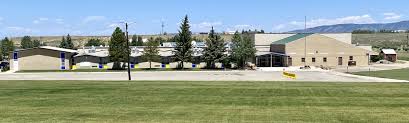
North Park School District is where the Monday debate was held. The North Park government class set up a stage for the candidates and seating in the bleachers for community members.
Eight candidates participated in a debate Monday, facilitated by Tim Souza, a North Park High School social studies teacher, and student moderators from the school’s government class.
The students compiled five questions for the four participating offices, highlighting elements such as candidate experience, relevant issues and youth impact.
The debate was held from 6:30 to 8 p.m. in the North Park School gymnasium and featured candidates for Jackson County’s commissioner, clerk, coroner and sheriff.
COMMISSIONER
Candidates for Jackson County District 1 commissioner highlighted experience, economic development, land use and infrastructure during the debate.
John Lathrop and Matt Shuler outlined their qualifications and priorities in response to questions from a student moderator.
Experience
The moderator asked what experience the candidates have managing large budgets or securing government grants to keep the county financially stable.
Lathrop said his private-sector experience prepared him to manage public funds.
“I worked for some of the largest companies in the world, providing top-tier service,” Lathrop said. “Some of my budgets that I dealt with on a monthly basis are larger than Jackson County’s whole budget for a year.”
Lathrop said those experiences taught him the importance of teamwork and fiscal discipline, especially in a county with a limited tax base.
“You have to provide the best service possible on a budget,” Lathrop said. “We have a very small tax base here, so we have to utilize every dollar that we spend.”
Lathrop said maintaining strict budget standards can strengthen the county’s ability to secure grants, which are critical to supporting essential community services.
Shuler said his experience managing budgets and serving on local and regional boards has prepared him for public office.
Shuler said he served on the North Park School District Board of Education for 14 years, including 10 years as president, working with a limited budget while balancing multiple revenue resources and expenses.
According to Shuler, he has overseen several budgets in various leadership roles, ranging from $8,000 to $1.2 billion.
Shuler said he has helped secure funding for infrastructure improvements and pointed to additional funding resources, including private, philanthropic, nonprofit and government grants.
“The hardest thing to do as a county commissioner or a school board member is understanding what you can do,” Shuler said. “What you can do is try to the best for your constituents, and then there’s a vote.
“And the hardest part is representing the board after the vote is taken,” Shuler said.
Future Workforce
The moderator asked what steps candidates would take to make it more affordable for young people to live and work in the area.
Lathrop said addressing affordability will require a community-wide effort. “It’s not just going to be one person,” Lathrop said.
Lathrop said existing programs, such as Proposition 123, could provide the county with potential opportunities for affordable housing, though the county has not opted in.
“There are some benefits to that and downsides,” Lathrop said.
Lathrop said retaining younger residents will depend on attracting investment and expanding industry.
“But the biggest thing is, we have to invite investors into our community and sometimes we don’t do the best job at that,” Lathrop said. “We don’t market North Park to its fullest potential.”
Shuler said Jackson County has long relied on industries such as mining, agriculture and timber, and should continue exploring those opportunities, including the possible development and exploration of critical minerals.
“We’ve got to look for those opportunities where we have them,” Shuler said.
According to Shuler, North Park faces land limitation issues, with about 68% of the county being federally owned.
Shuler said in efforts to provide affordable housing to recruit teachers, he helped the school district purchase houses with the support of the Department of Local Affairs due to the oil and gas industry.
“You can’t hire people if you don’t have people,” Shuler said. “You can’t do that.”
Shuler said community input and creative solutions will be essential to addressing affordability and supporting long-term growth.
“We’ve got to quit saying no to things that might be good ideas, even down the road,” Shuler said. “But we also have to take in consideration the harm that it may cause outside of us.
“But think of the harm that’s been caused by saying no,” Shuler said.
Land Use
The moderator asked candidates how they would balance tourism growth with the needs of the traditional ranching industry.
Lathrop said balancing tourism and outdoor recreation while protecting traditional ranching will be a challenge for the county.
“But the bigger problem is that every day it’s getting tougher and tougher to do traditional ranching in North Park,” Lathrop said. “So, we have to find that balance.”
Lathrop said increased tourism can strain infrastructure, including roads and water systems, and warned against adding regulations that could further burden ranchers already facing rising costs.
“It’s just getting to the point that they can’t survive,” Lathrop said.
Lathrop said diversifying the economy will help reduce reliance on a limited number of industries and allow ranchers to supplement their income.
Lathrop raised concerns about ongoing challenges in the ranching community:
“It’s just getting to the point that we are losing more family ranches and absentee owners are coming in. Those are the neighbors that we deal with, but they’re not the neighbors that we can call on when somebody is sick and go check on them. They’re not the neighbors that are coming out fixing our fence with us. They’re not the neighbors that are working in the hayfield with us.”
Lathrop said tourism and ranching can coexist with careful planning.
Shuler said Jackson County’s future depends on strengthening traditional industries while embracing new opportunities.
“We’ve had mining, we’ve had timber, we’ve had agriculture,” Shuler said. “There was even a lettuce crop that was taken out on rail.”
Shuler said Forest Service restructuring could reverse the decline in the logging industry and potentially bring back mills.
“They’re trying to get in more local input,” Shuler said. “So local control for the forests would be a great thing in this park.”
Shuler said potential regulations could increase costs for agriculture and stressed the importance of local voices in those decisions.
“We’ve got to get our voices out there because there are other benefits of living here,” Shuler said. “Choices of living here are important to everybody.”
Shuler said innovation and technology can open new opportunities for the county, particularly through its younger residents.
Infrastructure
The moderator asked candidates how they plan to prioritize road maintenance with a limited budget, particularly for school routes.
According to Lathrop, limited investment from the Colorado Department of Transportation has contributed to declining highway conditions, though recent advocacy has led to some improvements.
“Our county roads is where we make the difference at the county level,” Lathrop said. “We need to prioritize what roads we’re fixing and what roads we’re not, based on that use for emergency and with kids.”
Lathrop said years of deferred maintenance and temporary repairs, especially on cattle guards, have driven up costs and raised safety concerns.
“We have to utilize the budget that we have,” Lathrop said.
Lathrop said the county should reevaluate its budget to prioritize road and bridge funding and preventive measures to ensure taxpayer dollars are used effectively.
“I think there’s a lot of times money is taken out of the road and bridge department to put into other departments,” Lathrop said. “That rate of return on the investment is better spent in the road and bridge department than the departments it’s going to.”
Shuler said county leaders must balance limited resources across essential services, including roads, facilities and payroll.
“This year, according to the 2026 Jackson County budget, about 40% of the total budget is going to be spent in the general fund,” Shuler said. “That includes the courthouse, that includes the manufacturing of the government that’s here and about 34% is allocated to the road and bridge service fund.
“The entire budget is going to have between 70 and 80% of the entire budget on payroll,” Shuler said.
Shuler said payroll and employee benefits make up a significant portion of the budget, requiring commissioners to balance costs while maximizing benefits for the community.
“The payroll is what gets the work done,” Shuler said.
Shuler said partnerships and outside funding, including private investment and grants, will be critical to addressing long-term infrastructure needs.
“So, you gotta pick your battles, you gotta find the money out there,” Shuler said. “There’s private funds that are doing that, and an example is the North Park Clinic.”
Shuler said the building was funded primarily through private partnerships rather than county resources and emphasized that securing grants requires building relationships and demonstrating responsible use of funds.
Shuler said road improvements are being made despite limited resources, but repairs take time, funding and cooperation from the community.
“I agree with John, CDOT is a great big problem, but when you lose product because of the roads, it’s a big problem for everybody,” Shuler said. “We’ve been losing for a lot of years.”
Despite those challenges, Shuler said collaboration and communication remain essential.
Souza, debate facilitator, said time expired for the commissioner candidates, though they later returned to complete the final question.
Representation
The moderator asked candidates how they would ensure the voices of younger residents are heard in county planning meetings.
Shuler said community leaders must actively engage younger residents by asking questions, listening to their concerns and helping guide them to the appropriate forums for discussion.
“You’ve got to listen,” Shuler said. “Then you have a conversation.”
Shuler said encouraging participation in local meetings and supporting them through the process can lead to more informed conversations and better decision-making.
“You get them to the right place,” Shuler said. “If that doesn’t work, go with them.
“Nobody likes going on their own to any place,” Shuler said.
Lathrop said the youth is often an unheard voice and proposed structured opportunities for engagement.
“I think that we need to get them involved in how government is run better than we do now, because a lot of them don’t understand,” Lathrop said.
Lathrop said forming a student advisory group in partnership with the school district would allow student representatives to regularly meet with county commissioners and speak during meetings.
“I think that it is crucial for them to be able to have a voice at the table,” Lathrop said.
CLERK
Candidates for Jackson County clerk highlighted experience, office efficiency, voter participation, transparency and election security during the debate.
Shelly Juranek and Jo McQuery outlined their qualifications and priorities in response to questions from a student moderator.
Experience
The moderator asked candidates which professional accomplishment best demonstrates their readiness to manage the position.
Juranek said she worked five years in an accounting department and more than eight years managing finances for a handyman business, gaining experience that has prepared her for the role.
“I had to make my own proposals and estimates to make sure the cost effect was for the customer as well as the business,” Juranek said.
Juranek said co-owning businesses required her to manage finances, taxes and records while working with multiple software systems.
McQuery said through her time working at the Town of Walden as a clerk she has received training in operations and government budgets.
McQuery said she volunteers for the ambulance and works to give back to her community. Efficiency
The moderator asked candidates how they plan to ensure residents can complete vehicle registrations and records efficiently without long wait times.
Juranek said she would improve accessibility and customer service in the office by adjusting hours and staffing.
“One of the things I’d like to do is start staggered lunches so there’s always somebody there during that time, even if we have to maybe hire somebody part time,” Juranek said.
Juranek said implementing the utilization of Friday work hours would better serve residents who are paid at the end of the week and need to access services.
“Hopefully the community and the current staff understand and will appreciate and work with this,” Juranek said.
McQuery said the office should remain open five days a week with staggered lunch hours but declined to commit to reopening on Fridays.
“I don’t know why they are closed on Friday, so therefore, I hate to say, I won’t promise to do that,” McQuery said
Voter Participation
The moderator asked candidates what they would do to make the voting process more accessible and educational for first-time voters.
Juranek said accessibility and education for first-time voters could include offering mock elections to familiarize participants with the voting process.
“Then they can go ahead and know what they have to do as far as voting for what candidate,” Juranek said.
Juranek said this approach can show how the system works and how election security ensures a fair and impartial process.
McQuery said casting a vote is an honor and an important way for residents to have their voices heard, even when it may not feel that way.
“In a small community like Walden, every vote counts,” McQuery said. “That’s one thing I really want to put out there.”
McQuery said she wants to work with the school to promote voter registration and education, including organizing an event to help students understand the voting process.
“Mr. Souza has done an amazing job with the teaching,” McQuery said. “I think it would be fun to be involved in this.”
Transparency
The moderator asked candidates how they would use technology to improve transparency in county records and election results.
Juranek said improving voter access requires addressing technology gaps in the community, along with being mindful of social media use.
“I’m also realistic that some people in the community don’t own a computer, don’t know how to work a computer,” Juranek said. “Just the little tiny phone.”
Juranek said hosting workshops at locations such as the senior center, to offer residents hands-on assistance in accessing websites and finding reliable information.
“There’s a lot of information out there, but sometimes people just don’t know where to look for it,” Juranek said.
McQuery said improving access to election results requires both digital and in-person options for residents.
“For the election part, I would keep posting as results come in,” McQuery said.
According to McQuery, the county is working to ensure online information is accessible to the public, though doing so requires significant time and resources.
McQuery said posting results in public spaces and offering monthly in-person assistance would help residents without internet access or those who struggle to navigate online resources.
Security
The moderator asked candidates how they would use technology to improve transparency in county records and election results.
Juranek said her experience working in an election department in 2022 prepared her to uphold election security and integrity.
“Haley [current clerk and recorder] was instrumental in training and teaching everybody on what to do with the ballots, how to do it, and make sure that it was completely secretive and make sure that every opportunity for those ballots to be confidential,” Juranek said.
Juranek said educating the community and neutral parties about the process helps strengthen overall understanding and ensure impartiality.
Juranek said her commitment to learning and ongoing training would support both her performance and that of her colleagues.
“I’m up for the challenge,” Juranek said. “I want to learn.”
McQuery said maintaining election security requires collaboration with the Secretary of State, law enforcement and other agencies, as well as continuing current laws and practices while making updates as needed.
McQuery said she has also participated in the election process.
“I thought that sometimes it was overdone, it was too much,” McQuery said. “But then after you step back and actually see the whole thing, you realize you can never be too cautious.”
CORONER
Candidates for Jackson County coroner highlighted experience, sensitivity, collaboration and education during the debate.
Monica Love and George Crocket outlined their qualifications and priorities in response to questions from a student moderator.
Experience
The moderator asked candidates what specific medical or legal experience they bring to ensure investigations are handled with scientific accuracy.
Love said her background includes 10 years as an EMT with the local ambulance service and three years as dispatch, where she gained experience working with individuals on some of the most difficult days of their lives.
“I have learned how to deal with people, how to let them express their feelings, their concerns,” Love said.
Love said she has completed a condensed death-investigation course and would pursue additional training if elected.
Crocket said his experience includes more than 30 years working in a coroner’s office and 23 years as a certified death investigator in Colorado.
“It took a lot more time to become a certified death investigator a few years ago than it does now because they changed the program because they found out the rural Colorado does not have homicides to investigate,” Crocket said.
Crocket said he stays current on investigative practices, completing 20 to 45 hours of education annually.
Sensitivity
The moderator asked candidates how they plan to ensure their office operates with the highest level of sensitivity when dealing with grieving families.
Love said her experience as an EMT has prepared her to work with people during difficult moments and emphasized the importance of privacy laws.
“We also hire deputy coroners,” Love said. “They would also be trained with the HIIPAA laws.”
Crocket said maintaining clear and consistent communication with families, forensic pathologists and legal professionals helps ensure cases are handled with care and sensitivity.
The third question, on public health, addressing the hidden health threats and prevention strategies was removed from the debate by mutual agreement.
Collaboration
The moderator asked candidates how they would coordinate with state investigators or neighboring counties to ensure thorough investigations.
Love said she would establish strong communication by gathering contact information for surrounding counties and maintaining open lines for collaboration and resource sharing.
“I would also work closely with our community health here for public education if anything is needed for that,” Love said.
Crocket said he already has established working relationships with officials in Grand, Routt and Larimer counties, as well as with forensic pathologists and investigators.
“I’m in touch with the Colorado Department of Health,” Crocket said. “I’m in touch with the Colorado Corners Association.”
Crocket said he is trained to respond to mass-casualty incidents and assist in managing those situations.
Education
The moderator asked candidates whether they would be open to partnering with the high school science department to explain the forensic science aspects of their work.
Love said she would work the school to help students learn about the role, its impact on the community and find resources for students to utilize.
“There’s classes for high school students that they can take while they’re in school if this is the path that they choose to go,” Love said.
Crocket said he would work with the school and has partnered with the science class over the years to help connect students with resources.
“We had one student here who wanted to do her senior project on autopsies,” Crocket said. “I was able to facilitate that and have her be able to do that for her senior project.”
SHERIFF
Candidates for Jackson County sheriff highlighted experience, youth engagement, local policy, substance abuse and recruitment during the debate.
Andy Collins and John Symonds outlined their qualifications and priorities in response to questions from a student moderator.
Experience
The moderator asked candidates what specific leadership or tactical experience prepares them to manage the department during a major crisis such as a wildfire.
Collins said his experience responding to wildfires has prepared him to manage emergency situations.
“I spent three months during the High Park fire on an incident management team,” Collins said. “Then the largest Colorado wildfire, the Cameron Peak fire, for three months on that too.”
Collins said he has 12 years of experience as a fire captain with the Poudre Canyon Fire Department, giving him strong familiarity with wildfire response operations.
Symonds said he has lived in Jackson County for more than 40 years, including 25 years as a full-time resident.
According to Symonds, he does not have a law enforcement background but has 10 years of experience managing oil field operations, where he handled emergencies including fires and equipment failures.
Symonds said his experience has prepared him to handle the challenges of the role. Youth Engagement
The moderator asked candidates how they plan to build positive relationships so students view deputies as mentors rather than just authority figures.
Collins said his role as a wrestling coach has made him approachable to students and helped establish trust.
“I’d like to have more involvement with everybody so, you know, our younger kids aren’t afraid of law enforcement,” Collins said. “The laws are there for everybody’s benefit, but you don’t need to be afraid of the laws also.”
Collins said continued education and outreach through the sheriff’s department could help strengthen those relationships and promote understanding of laws and their purpose.
Symonds said his three children went to school at North Park, where he kept in contact with the students in the class as well as teachers.
Symonds said he would continue to this level of communication and be open to suggestions. Local Policy
The moderator asked candidates how their office would balance state mandates on wolf reintroduction with local ranching heritage and property rights.
Collins said the sheriff’s office serves a limited role with the wolf reintroduction but would focus on public safety issues.
Collins said he has established working relationships with Colorado Parks and Wildlife officials and would continue collaborating with state and regional agencies when issues arise.
“So, you know when there is a wolf issue, do the best that we can to work together with all the other agencies,” Collins said.
Collins said state decisions may not align with local priorities but stressed the importance of working within regulations while advocating for the community.
Symonds said the issue is highly contentious and has generated significant concern in the community.
Symonds said residents should contact the sheriff if problems arise so they can be addressed promptly.
Symonds said that working with the departments like the U.S. Fish and Wildlife Service, CPW and others would be a key part of doing the job.
Substance Abuse
The moderator asked candidates to outline their plans for addressing substance abuse and mental health crises in a county with limited access to medical facilities.
Collins said the county lacks the resources needed to address increasing mental health and substance abuse concerns.
According to Collins, the sheriff’s department could benefit from additional training to better equip personnel to respond to mental health and substance abuse crises.
“Everything is, you know, an hour away, two hours away for any true professional help,” Collins said. “So, it’d be nice if there was some way that we could do something within the department.”
Symonds said the resources available to county residents are limited, the Sheriff would need to be trained to help with the situation.
According to Symonds, there are not a lot of resources since the last mental health expert passed away and finding help has been a problem that persists in the county.
Recruitment
The moderator asked candidates how they would ensure Jackson County remains competitive in attracting and retaining high-quality deputies.
Collins said recruiting and retaining qualified personnel is a challenge in the rural community and attracting younger residents to careers in law enforcement may be the key to building a long term workforce.
Collins said developing local recruitment efforts, including cadet-style programs, could help engage students and encourage them to pursue local public safety careers.
“It would be kind of awesome if we could do something like that to get the kids involved, to start recruiting locally,” Collins said. “Not just as deputies, but as jailers and dispatchers, because that’s a huge part of everything too, it’s not just the law enforcement side.”
Collins said building interest locally could help reduce reliance on outside hires and strengthen retention in the community.
“If we could start early recruitment with kids that are, like I said, interested in a law enforcement career, that I think would be a great starting point from there,” Collins said.
Symonds said recruiting staff is always challenging, whether in the sheriff’s department, health care or other fields, and funding is often a factor.
Symonds said the amount available to the department is finite and finding the right uses is the key, a task that requires significant effort.
“I am not scared of work,” said Symonds.
Souza said the event was a success, providing a platform for candidates to clearly outline their policies while engaging directly with the community.
“More importantly, the event empowered the senior class to move beyond the role of spectators and become active participants in a local election,” Souza said. “It offered them a firsthand look at the mechanisms of local governance and demonstrated how tangible change begins at the community level.”
Souza said the event put the students in the “driver’s seat” of the political process, helping them understand leadership, the value of their vote and their ability to hold officials accountable.
“Beyond the civic education, the event provided a practical professional development opportunity,” Souza said. “Students who participated in the moderation and presentation aspects were able to refine their public speaking skills and gain confidence in front of a large, diverse audience – a skill set that will serve them well far beyond graduation.”
Souza said these events connect classroom learning to real-world experiences while giving candidates direct access to young voters and helping the public make more informed decisions.
“I strongly advocate for this to become a recurring tradition,” Souza said.
 SJ Media